Yahoo Sports
Why One Top-Tier Starter Won’t Solve the White Sox Rotation Next Season
Yahoo Sports
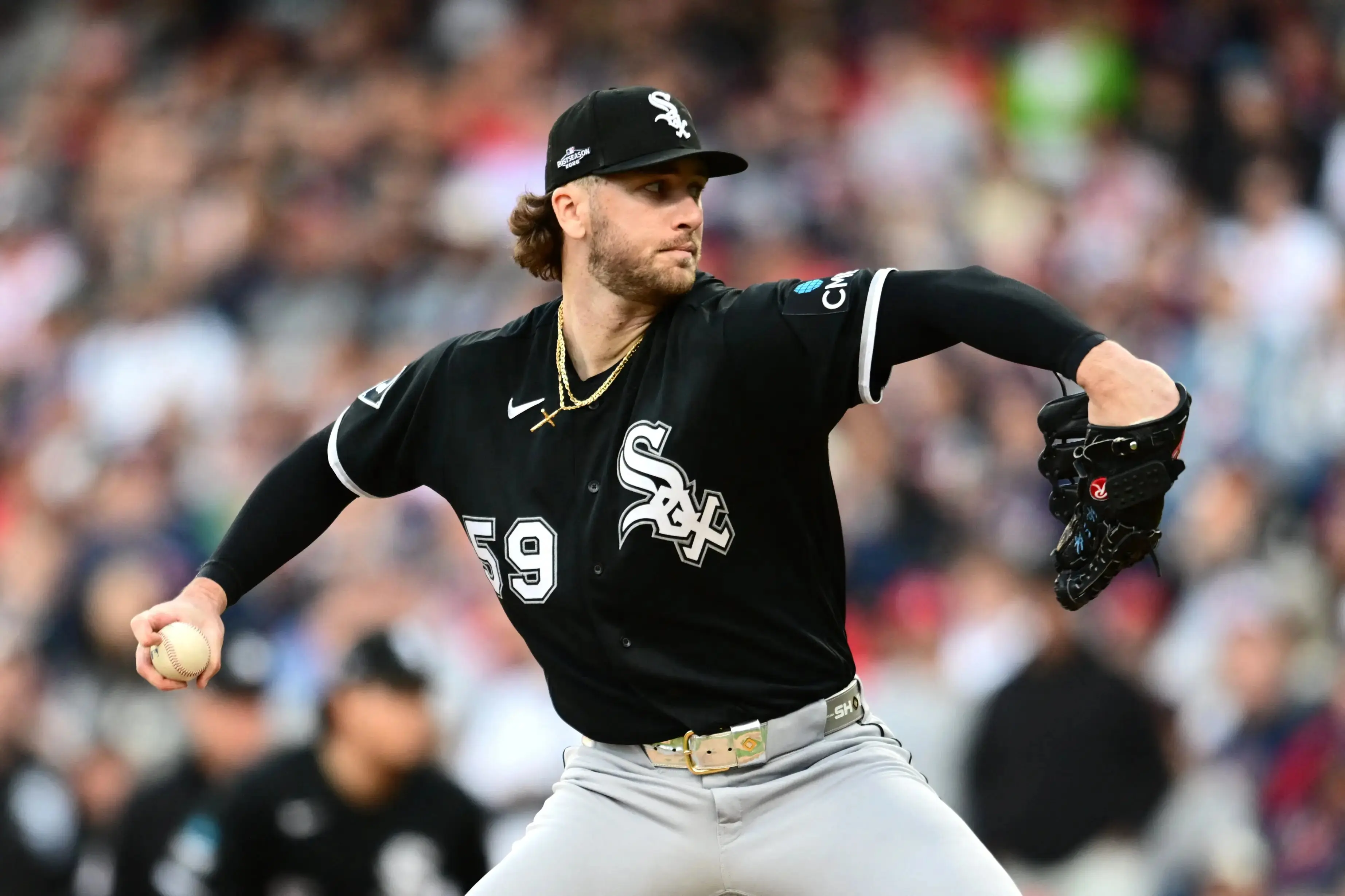
With the dust having settled on the Chicago White Sox’s 2026 season, the structural cracks in the team’s engine room have been the focus this offseason. The South Siders still haven’t acquired a top-of-the-rotation ace, which fans expected after general manager Chris Getz said it is part of the organization’s goals in the coming weeks. But acquiring just one top starter while seeking conventional ways to transition relievers to starters is a strategy that will likely fail in the late stages of the 2027 regular season (if there is one, given the looming December lockout).
The White Sox covered 2026 with opener concepts, bullpen days, and piggyback tandems to cover a starting rotation that posted just 674 2/3 innings, one of the lowest totals in Major League Baseball. Sean Burke carried most of the burden with his breakout 11-7 regular-season campaign and an elite 3.34 ERA, providing a genuine anchor for the pitching staff. But when the postseason pressure mounted against the Guardians, lack of top-tier rotation depth on the Chicago roster was heavily exposed. Fixing that would cost the White Sox a lot, and considering Jerry Reinsdorf’s deep-seated aversion to spending big for a starting ace, it only reduces the hopes of the franchise becoming a powerhouse in the American League next season.
How Many Aces Must the White Sox Acquire?
It is tempting to rely heavily on talented young arms, placing a lot of pressure on them to become leaders in the pitching staff. The White Sox system is currently brimming with elite, high-ceiling arm talent. From Noah Schultz to Hagen Smith and David Sandlin , they all represent prospect potential to become top-tier starters. But in 2027, they could only become dynamic mid-rotation starters, including Grant Taylor . This season, Schultz and Smith operated under a strict inning management profile because of their previous struggles with injuries.
Neither has been fully tested with a huge workload in the 162-game MLB regular season. So, throwing them into the fire next year could lead to physical breakdown and development bottlenecks. Or, let us assume that Burke reproduces his 2026 form on the mound and Davis Martin continues to prove serviceable amid his injury troubles; will that be ideal rotation depth that the team will bank on next season? That begs the question about which is best for the White Sox: One top-of-the-rotation starter or two, two mid-rotation starters, or one top-of-the-rotation starter and one mid-rotation starter. Whichever way the White Sox front office will look to deliberate on that issue, getting two will be ideal.
There are rumors that the Sox might get former San Diego Padres ace, Michael King . Should the trade happen, it is really a big, ambitious step following what the team did last year, but acquiring only him isn’t going to make the White Sox a genuine contender for the World Series in 2027. The Sox have to get one mid-rotation starter, a top-profile pitcher like Nick Martinez , who posted a career-high 180 innings with the Tampa Bay Rays this season, finishing 15-6 with a 3.10 ERA. He has a strong command of the zone, walking just 26 hitters all year, and got the honor of starting Game one of the World Series against the Milwaukee Brewers.
Why Two Acquisitions Are Necessary?
The reason why the White Sox have to acquire two starters is simply to give Burke a highly comfortable No.3 or No.4 slot, while Martin takes a No.5 role. That also gives a fluid environment for Smith, Taylor, and Schultz, protecting their young arms . Demanding 30 starts from Smith and Taylor right away in 2027 will be too much to handle despite having shown promising potential this year. Instead, the White Sox can ease them into a 100-120 inning framework, deploying Smith and Taylor when their arms are sharpest without burning out their shoulders.
This also preserves the bullpen from being overtaxed, especially at the later stages of the regular season. Two mid-rotation starters or a top-of-the-rotation ace combined will bear the burden of 350 to 380 innings in the regular season, which easily transitions the bullpen from an overused engine to an elite strikeout machine late in games. And that will be a clear reversal from what the White Sox did in the 2026 season, which demanded the bullpen pitch in 766 innings , the highest in Major League Baseball.
Finally, this offseason trade market offers the White Sox front office the opportunity to break precedent by targeting top-tier free-agent starters. And striking on two experienced players is entirely feasible given Chicago’s asset sheet; the only thing is whether Reinsdorf will be willing to splash the cash for it.
Main Photo Credit: Ken Blaze-Imagn Images
More Baseball News:
Phillies Upcoming Rule 5 Draft Protection Decisions
Will the CBA Cause an MLB Lockout?
2025 Arizona Fall League Award Winners: Where are They Now?
Kontekst drużyn
Forma, następny mecz i miejsce w tabeli drużyn z tego artykułu.
