Yahoo Sports
Barry Sanders Sheds Light on Biggest What-If In Detroit Lions History
Yahoo Sports
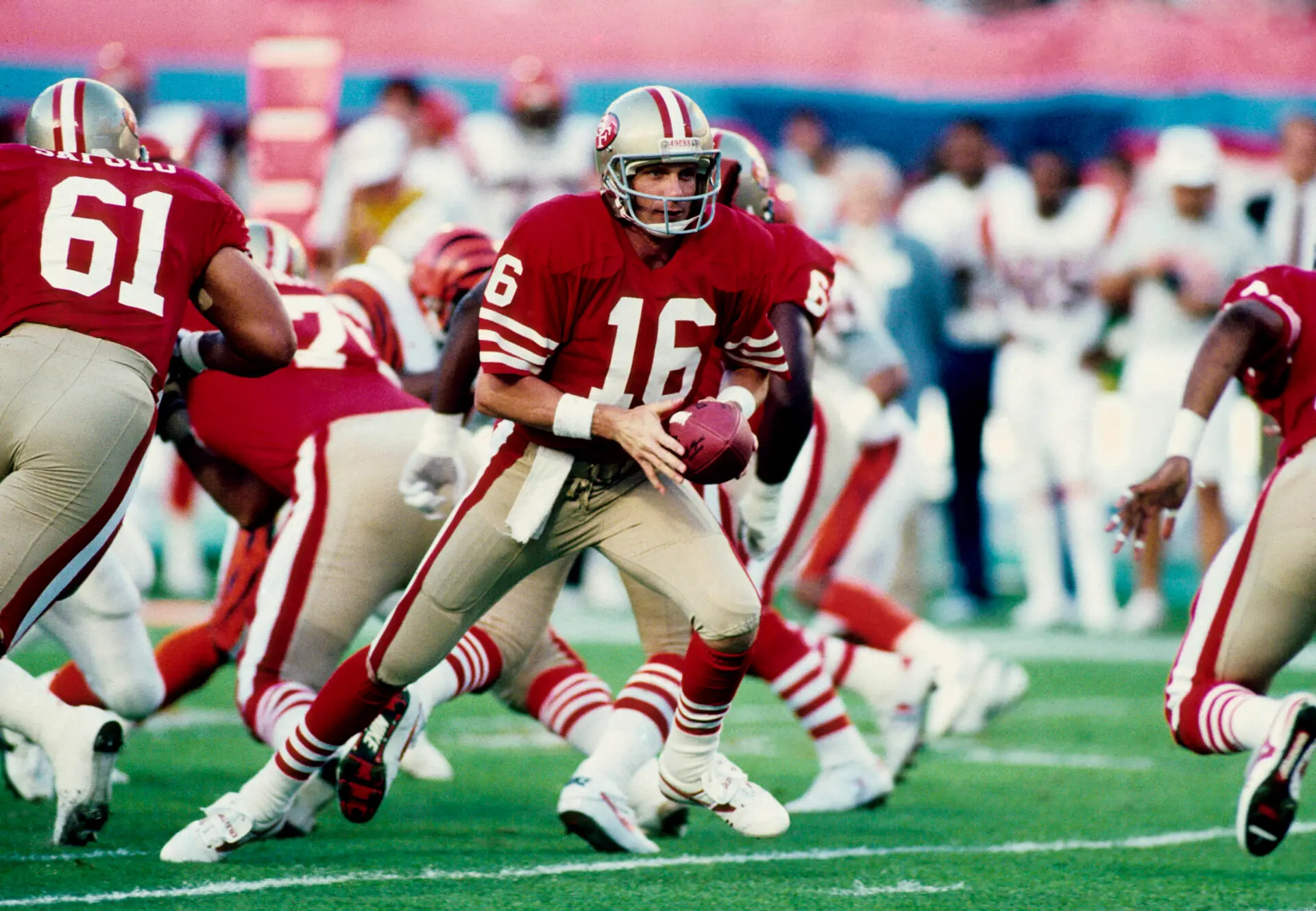
Imagine Barry Sanders and Joe Montana sharing the same backfield in Detroit.
One of the greatest running backs in NFL history lining up behind one of the greatest quarterbacks to ever play the game. Two Hall of Famers, both capable of taking over a football game, wearing Honolulu blue and silver.
For Detroit Lions fans who lived through the 1990s, it almost sounds too good to be true.
But here’s the painful part: According to Barry Sanders, it nearly happened.
During an appearance on The Dan Patrick Show , Sanders revisited the incredible story of how Montana wanted to join the Lions in 1993, only for Detroit’s front office to reject the opportunity.
And judging by Sanders’ comments, he knows just how much that decision may have cost the franchise.
Barry Sanders Reveals How Joe Montana Nearly Joined the Lions
Montana was approaching the end of his legendary tenure with the San Francisco 49ers when he reportedly contacted then-Lions head coach Wayne Fontes about the possibility of coming to Detroit.
Fontes was thrilled.
The front office? Not so much.
Sanders explained how the situation unfolded during his conversation with Dan Patrick.
“You know, Coach Fontes tells the story that Joe called him up, and he was excited, obviously,” Sanders told Dan Patrick. “Joe said he wanted to come and play in Detroit. This is obviously when he was leaving the Niners, and he before he signed with the Chiefs. And Coach Fontes took that word back to the organization, and I guess they thought Joe Montana was too old, or whatever, at that point, so the deal didn’t happen. Wouldn’t that have been something?”
Yes, Barry. It certainly would have been something.
And the story gets even more frustrating when you consider exactly how the Lions handled the opportunity.
In the 2023 documentary Bye Bye Barry , Fontes recounted his conversation with Montana and Lions general manager Chuck Schmidt .
According to Fontes, Montana personally expressed interest in playing alongside Sanders. Fontes brought that possibility to Schmidt, but the general manager believed Montana was too old and nearing the end of his career.
Montana was 36 at the time, turning 37 before the 1993 season.
Considering that he had missed significant time with injuries, there was certainly some risk involved.
But this wasn’t just another aging quarterback looking for one final paycheck.
This was Joe Montana.
A four-time Super Bowl champion. A three-time Super Bowl MVP. A quarterback who had spent his career proving he could deliver when the pressure was at its highest.
And he wanted to play with Barry Sanders.
The Lions Passed. Joe Montana Proved Them Wrong.
Instead of joining Detroit, Montana was traded to the Kansas City Chiefs in April 1993 .
What happened next makes Detroit’s decision even harder to understand.
Montana immediately helped transform the Chiefs into a legitimate Super Bowl contender, leading Kansas City to the AFC Championship Game during the 1993 season.
A year later, he guided the Chiefs back to the playoffs before retiring following the 1994 campaign.
Was Montana still the same quarterback who dominated the 1980s with San Francisco? Not quite.
But he was absolutely capable of winning football games, managing an offense, and delivering in important moments.
Now imagine what he might have accomplished with Sanders standing behind him.
Detroit already possessed one of the most electrifying offensive weapons in football. Sanders could turn a broken play into a 50-yard touchdown and make even the NFL’s best defenders look helpless.
What the Lions lacked was a consistently elite quarterback who could force opposing defenses to respect the passing game.
Montana could have changed that equation.
Defenses would have faced an impossible choice: commit additional defenders to stopping Sanders or give one of football’s most accomplished quarterbacks opportunities to attack through the air.
Would that combination have guaranteed Detroit a Super Bowl?
Of course not.
But it would have given the Lions a legitimate chance to build something special around their greatest offensive player.
Barry Sanders’ Final Comment Says It All
Perhaps the most revealing part of Sanders’ discussion with Patrick wasn’t his explanation of how the potential move fell apart.
It was his assessment of how successful organizations separate themselves from everyone else.
“Some teams make great decisions, you know, on personnel, and what have you, and you see why they have success, and you see why others don’t”
Ouch.
Sanders didn’t need to mention Schmidt by name or launch into a lengthy criticism of the Lions organization.
His point was clear.
The decisions made by a franchise’s leadership can determine whether a talented team becomes a champion or spends years wondering what might have been.
And that description fits Detroit’s Barry Sanders era almost perfectly.
The Lions reached the NFC Championship Game following the 1991 season, demonstrating that they had the talent to compete with the league’s best.
They won the NFC Central in 1993 and made additional playoff appearances during Sanders’ career.
But they never returned to the conference championship game.
As our look back at the most devastating moments in Lions history illustrates, Sanders’ eventual retirement in 1999 remains one of the franchise’s most painful chapters.
Now consider how different things might have been if the Lions had made another decision six years earlier.
What if Montana had spent the final two seasons of his career in Detroit?
What if Sanders had experienced a deep playoff run alongside one of football’s greatest leaders?
And what if the Lions had finally reached their first Super Bowl?
Those are questions Detroit fans will never be able to answer.
The Bottom Line
There have been plenty of painful personnel decisions throughout Detroit Lions history.
As previously explored in a collection of the NFL’s biggest historical what-ifs , one different decision can completely alter the direction of a franchise.
But passing on Joe Montana when he reportedly wanted to play alongside Barry Sanders belongs near the very top of Detroit’s list.
The Lions had a generational running back, a team capable of competing for playoff spots, and a Hall of Fame quarterback interested in joining them.
Instead, they decided Montana was too old.
He went to Kansas City and helped lead the Chiefs to an AFC Championship Game.
Detroit continued searching for the quarterback who could take advantage of Sanders’ extraordinary talent.
And more than three decades later, Barry Sanders is still reminding us of what could have been.
For Lions fans, that’s a football nightmare that will never completely go away.
Contexto dos times
Forma, próximo jogo e posição na tabela dos times desta matéria.


